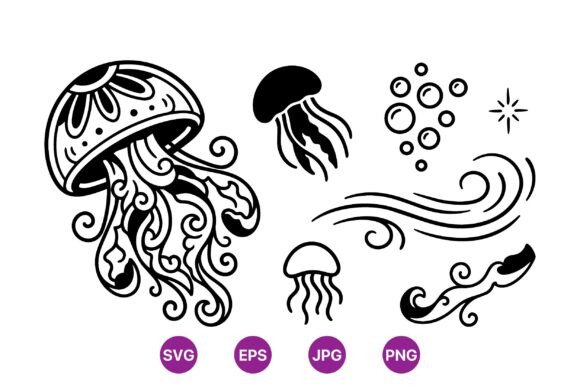
Decorative Jellyfish Vector Art: A Versatile Graphic Design Asset
As a professional graphic designer with years of experience in branding, packaging, and digital design for small businesses, I’m always on the lookout for high-quality illustrations that can elevate a project without overcomplicating it. Recently, I came across the Decorative Jellyfish Vector Art, and after running it through several real-world scenarios, I wanted to share my insights from a practical perspective. This piece is more than just another jellyfish clipart—it's a refined, elegant asset that could easily become part of your next creative design toolkit.
A First Impression of Elegance and Intricacy
The first thing that struck me about the Decorative Jellyfish Vector Art was its visual sophistication. The stylized jellyfish features swirling tentacles and delicate wave motifs, creating a soft, fluid motion that feels very natural. It’s rendered in black and white, which makes it incredibly versatile—perfect for both monochrome compositions and as a base for color overlays or gradients later on. The level of detail suggests this isn’t a simple placeholder illustration but a serious graphic design asset meant for commercial use.
Its ornamental style leans toward the decorative side of marine-themed design, making it ideal for projects where you want to evoke a sense of whimsy or tranquility. Think boutique skincare brands using ocean imagery, handmade soap labels with a touch of elegance, or even seasonal campaign visuals for a coastal resort. The art has a hand-drawn feel yet remains crisp and clean due to its vector format, which is essential when scaling for different applications.
Real-World Use in Branding and Marketing Projects
I tested the Decorative Jellyfish Vector Art in a few mock client scenarios to see how it would perform. One example was a brand identity package for an emerging handmade jewelry line called "Sea & Thread." Their aesthetic leaned heavily into organic textures and ocean-inspired motifs. When I incorporated the jellyfish into their logo concept, it added just the right amount of movement and symbolism—something that felt unique and not cliché like typical sea life graphics.
Another scenario involved product labels for bath bombs and candles. Here, the jellyfish worked beautifully as a central motif, paired with a serif font for a classic look. The intricate lines and bubbles gave the label a premium feel while still maintaining clarity at smaller sizes. In contrast, when I tried using it alongside a sans-serif font for a modern beachwear brand, the result was less harmonious—the jellyfish felt out of place in a minimalist setting.
Where This Design Asset Shines
- Hero graphics: Its large-scale details make it perfect for background illustrations in posters, banners, and website headers.
- Product mockups: Especially for t-shirt designs, tote bags, and mugs, the jellyfish adds a subtle yet eye-catching element that aligns well with artisanal or eco-friendly themes.
- Printable wall art: With its elegant composition, it works well as standalone wall decor for home offices, spas, or boutique stores.
- Editorial and blog visuals: For articles about marine conservation, underwater photography, or travel to coastal destinations, this vector brings a thematic depth that supports content storytelling.
- Cricut projects: The vector paths are precise and easy to edit, making it a great candidate for cutting machines and layered paper crafts.
When to Use Decorative Jellyfish Vector Art with Caution
While the jellyfish art is undeniably beautiful, it’s not suited for every project. In one test, I used it as an accent on a business card for a corporate consulting firm. The outcome? It clashed completely with the professional tone they were aiming for. The same goes for logos in industries like finance or tech—this type of ornamental design might dilute brand authority rather than enhance it.
- Small sizes: The fine detailing doesn't hold up well in tiny dimensions. Always preview it at 50px or lower to ensure legibility.
- Crowded layouts: If you're already working with multiple icons or text-heavy designs, adding this jellyfish could muddy the visual hierarchy.
- Complex backgrounds: Due to its intricate nature, it may get lost if placed on textured or patterned surfaces. Test it against various background types before finalizing.
- Minimalist branding: As mentioned earlier, the ornate style doesn’t suit ultra-clean, modern design systems. Save it for clients who embrace a softer, more illustrative approach.
Design Notes for Commercial Application
Before integrating the Decorative Jellyfish Vector Art into a client project, there are several key checks to perform:
- Test in black and white: Confirm that the design holds its form and appeal without color.
- Check contrast: Make sure it stands out clearly on both light and dark backgrounds. Some elements may require slight adjustments for visibility.
- Preview at scale: Try it on a hero banner (large) and a social media post (small) to evaluate adaptability.
- Use on real mockups: Place it on actual product templates to see how it functions in context—especially for print-on-demand platforms like Etsy or Shopify.
- Verify file formats: Ensure SVG and PNG versions are included for flexibility in editing and transparency.
- Review commercial license: Double-check licensing terms before using it in any client work or for resale in a design bundle.
Compatibility with Fonts and Layouts
Font pairing is crucial with such an illustrative asset. I found that it pairs best with serif fonts and script fonts, reinforcing the ornamental theme. However, when combined with a display font or handwritten font, the results were mixed—some combinations felt cohesive, others looked cluttered. It’s important to balance the weight and style of the typography with the complexity of the jellyfish design to maintain a polished look.
In Canva templates, the jellyfish made a strong impact when used as a floating element in the corner of a flyer or invitation. But when placed centrally on a Pinterest pin, it overwhelmed the title text unless given enough negative space around it.
Emotional Appeal and Audience Engagement
The Decorative Jellyfish Vector Art has a calming effect—ideal for audiences looking for relaxation, mindfulness, or nature-inspired aesthetics. It evokes a sense of mystery and serenity, which can be particularly effective in wellness-related products, children’s books, or lifestyle blogs focused on oceanic themes.
For social media graphics, the jellyfish helped create a more engaging feed by breaking up text and offering a visual hook. It also supported the overall emotional narrative of a recent Instagram campaign for a sustainable fashion brand launching a new collection inspired by coral reefs.
Why This Is a Valuable Creative Design Element
What sets this vector apart is its ability to add character without overwhelming the viewer. Unlike generic stock graphics, it offers a unique blend of artistry and functionality. Whether you’re designing a product label, crafting a themed packaging design, or developing a set of printable designs for a digital seller, this jellyfish illustration can serve as a memorable and recognizable element.
It also contributes to brand consistency when used across multiple touchpoints—posters, stickers, web headers, and even sublimation designs for merchandise. The repeating wave and bubble motifs allow for seamless integration into larger patterns or collections, which is a big plus for designers building themed design assets.
Practical Tips for Using Decorative Jellyfish Vector Art
Here are some quick tips to help you integrate this design effectively:
- Use it as a hero graphic in editorial spreads or as a border element in invitation design.
- Layer it subtly behind text to create a soft, atmospheric backdrop without distracting the reader.
- Scale it down carefully—only the most prominent parts should remain visible in small formats.
- Consider converting it to color for digital ads or Instagram posts, but retain the black-and-white integrity for print-based design assets.
- Always inspect the SVG editability so you can tweak individual elements if needed.
Final Thoughts on Decorative Jellyfish Vector Art
In summary, the Decorative Jellyfish Vector Art is a powerful addition to any creative marketplace portfolio or commercial design project. It brings a level of refinement and artistic flair that’s hard to find in standard clipart or mass-produced illustrations. While it’s not a one-size-fits-all solution, it excels in contexts where marine themes, elegance, and visual storytelling are key components.
If you're a content creator or brand owner seeking to infuse your materials with a sense of movement and organic beauty, this jellyfish could be exactly what you need. Just remember to assess its fit within the visual language of your project and confirm its usability through the practical steps outlined above. Used wisely, it can significantly enhance the emotional appeal and professionalism of your design work.